


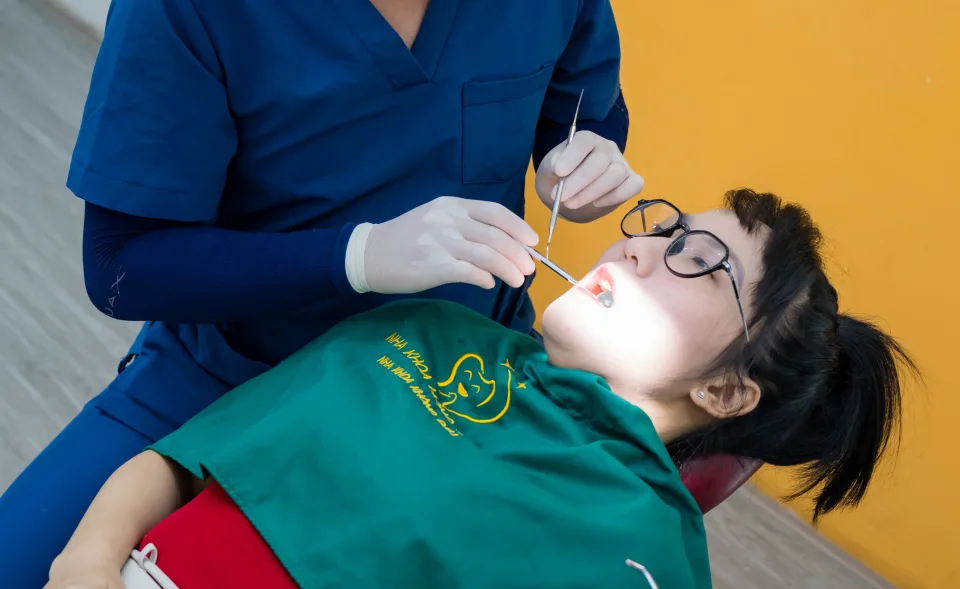
Planning a professional teeth cleaning in Hanoi
Professional teeth cleaning may be useful if you have visible tartar, surface staining, bleeding gums, persistent bad breath, braces, or areas that are difficult to clean at home. Hong Quynh Dental Clinic offers ultrasonic scaling and air-polishing options, with treatment explanations available in English.
A routine appointment typically takes about 30-45 minutes and is often completed in one visit. The actual time and recommended method depend on the amount and location of tartar, surface stains, gum condition, sensitivity, braces, implants, and existing restorations.
If you are visiting Hanoi for a short time, share your available dates and departure date when contacting the clinic. This helps the clinic arrange an appropriate appointment and explain any follow-up you may need.
Plaque, tartar, and surface stains
Plaque is a soft bacterial film that forms on teeth each day. Brushing and cleaning between the teeth can remove much of it before it hardens.
When plaque mineralizes, it becomes tartar, also called dental calculus. Established tartar attaches firmly to teeth around or below the gumline and cannot be removed completely with a toothbrush at home.
External surface stains may be associated with coffee, tea, tobacco, strongly colored food or drinks, and other factors. A stain may sit on the tooth surface or on existing tartar, but staining does not automatically mean that the tooth has decay.
Ultrasonic scaling is used to remove hardened deposits. Air polishing can help remove soft plaque and selected external stains. Neither treatment changes the natural internal color of teeth in the same way as teeth whitening.
When to arrange an assessment
Consider arranging a dental assessment if you notice:
- Hard yellow, brown, or dark deposits around the gumline.
- Gums that bleed during brushing or interdental cleaning.
- Red, swollen, sore, or sensitive gums.
- Persistent bad breath despite regular oral hygiene.
- Surface stains related to coffee, tea, or tobacco.
- Difficult-to-clean areas around braces.
- Rough deposits on the tooth surface.
- A long interval since your last dental or gum assessment.
- A need for cleaning before whitening or another dental treatment.
Bleeding gums, odor, or extensive tartar may occur with gingivitis, but they can also indicate a concern requiring further assessment. Routine scaling is not a substitute for diagnosing or treating more advanced periodontal disease.
Teeth cleaning and scaling prices
Vietnamese dong prices are authoritative. Dollar estimates use the Vietcombank USD transfer-buying rate checked on 12 November 2026: $1 = 25,510 ₫, rounded to the nearest whole dollar.
The dollar values are provided for comparison and do not indicate that payment in US dollars is accepted.
The exact price and cleaning method are confirmed after the dentist assesses the amount and location of tartar, plaque, surface staining, gum condition, and sensitivity. The 100,000-300,000 ₫ range should not be treated as three fixed disease levels.
You can also review the clinic's English dental price guide. If the examination identifies decay, periodontal disease, or another concern requiring separate treatment, the dentist will discuss the proposed care and cost before proceeding.
Payment
Hong Quynh Dental Clinic accepts:
- Cash.
- Bank transfer.
Confirm the selected cleaning method, treatment items, and total cost before treatment.
Ultrasonic scaling
An ultrasonic scaler uses a vibrating tip with water to help detach hardened tartar from the tooth surface. The dentist moves the instrument around areas with deposits and adjusts the technique according to the teeth, gums, and sensitivity.
Ultrasonic scaling may be appropriate when the primary goal is to remove hardened tartar from around the teeth and gumline.
The current price is 100,000-300,000 ₫, approximately $4-$12, and polishing is included. The exact price is based on the examination rather than a universal severity category.
During treatment, you may notice:
- Vibration from the instrument.
- Water in the mouth.
- Touch or pressure around the teeth.
- Brief sensitivity in some areas.
- Bleeding where the gums are inflamed.
Tell the dentist if one area becomes distinctly painful or increasingly uncomfortable.
Ultrasonic scaling and air-polishing combo
The 350,000 ₫ combo, approximately $14, includes:
- Ultrasonic scaling.
- Air polishing to help remove plaque and external surface stains.
- Tooth polishing.
Ultrasonic scaling targets hardened tartar. Air polishing helps clean soft plaque and selected external stains in a different way.
The combo may be considered when you have both tartar and visible plaque or surface staining. The result depends on the location, cause, and extent of the stains.
Non-traumatic air-polishing service
The non-traumatic air-polishing service costs 1,000,000 ₫, approximately $39, and includes polishing.
The recommendation depends on the tartar, plaque, staining, gums, sensitivity, and areas requiring cleaning. The dentist assesses these factors before recommending this option.
A higher price does not automatically make this the most appropriate choice for every patient. The exact clinical scope and how it differs from the 350,000 ₫ combo are confirmed after examination.
Do not select a method only by its name or price. The aim is to choose a cleaning approach that suits the current condition of your teeth and gums.
Ultrasonic scaling or air polishing?
The recommendation may consider:
- The amount and position of hardened tartar.
- Soft plaque accumulation.
- The cause and extent of surface staining.
- Gum inflammation or bleeding.
- Existing tooth sensitivity.
- Exposed root surfaces or cervical wear.
- Braces, implants, crowns, bridges, veneers, or other restorations.
- Areas that are difficult to clean at home.
- Your treatment goals.
Ultrasonic scaling may be suitable when hardened tartar is the main concern. The combination treatment may be useful when plaque and surface stains also need attention.
The non-traumatic air-polishing service is recommended according to individual findings. It should not be treated as automatically necessary because there are visible stains or because its listed price is higher.
Air polishing is not teeth whitening
Air polishing can remove plaque and selected external stains associated with coffee, tea, tobacco, or strongly colored food and drinks. Teeth may look cleaner or brighter after those stains are removed.
Air polishing does not change the natural color inside the tooth in the same way as bleaching. It also cannot guarantee complete removal of every stain.
If your natural tooth color remains darker after professional cleaning, you can ask about teeth whitening. The dentist needs to assess your teeth, gums, sensitivity, and visible restorations before recommending whitening.
What happens during the appointment?
1. Discuss your concerns and schedule
Tell the clinic about bleeding gums, sensitivity, persistent odor, staining, the date of your last cleaning, braces or restorations, and your available dates in Hanoi.
2. Examine the teeth and gums
The dentist assesses tartar, plaque, surface stains, the gumline, sensitive areas, and existing appliances, implants, or restorations.
3. Confirm the method and price
The available ultrasonic and air-polishing options are explained according to the findings. The selected method and cost are confirmed before treatment.
4. Remove hardened tartar
The ultrasonic scaler is used where hard deposits are present. The technique is adjusted according to the location of deposits, gum condition, and sensitivity.
5. Use air polishing when selected
For the combination or air-polishing service, air polishing is used to help remove soft plaque and selected external stains.
6. Polish the teeth
Polishing is completed after the cleaning steps associated with the selected option.
7. Review and aftercare
The dentist reviews the cleaned areas, gum condition, and anything requiring follow-up. You receive guidance on brushing, interdental cleaning, and an appropriate future assessment interval.
How long does teeth cleaning take?
A routine appointment usually takes about 30-45 minutes and is often completed in one visit.
The time may change because of:
- The amount and location of tartar.
- Plaque and surface staining.
- The selected cleaning method.
- Gum inflammation or bleeding.
- Tooth sensitivity.
- The number of areas requiring attention.
- Braces, implants, or restorations.
- The need for breaks during treatment.
The estimate is not a fixed promise. Tell the clinic if you have braces, sensitive teeth, gum concerns, or a long interval since your last cleaning so that appropriate appointment time can be arranged.
Can cleaning fit into a short stay in Hanoi?
A routine cleaning can often be assessed and completed during one visit. This may make it practical for travelers or residents with limited availability.
Share your departure date before booking, particularly if you have:
- Significant gum bleeding or swelling.
- Loose teeth or known periodontal disease.
- Marked sensitivity.
- Braces, implants, or extensive restorations.
- A concern that may require review after cleaning.
Routine activities can usually be resumed after a straightforward cleaning. If your gums are inflamed or the cleaning is more extensive, you may notice temporary tenderness, bleeding, or sensitivity and should follow the advice provided at the appointment.
Does teeth scaling hurt?
The experience depends on the amount of tartar, gum condition, exposed root surfaces, and sensitivity in each area.
You may feel vibration, water, pressure, or brief sensitivity. Areas with inflamed gums or deposits below the gumline can feel more sensitive.
Local anesthesia is not automatically required for every routine cleaning. If an area is painful or highly sensitive, the dentist will assess the cause and discuss an appropriate way to manage discomfort.
Distinct pain in one tooth should not automatically be treated as a normal scaling sensation. That tooth may require a separate examination.
Sensitivity and gum bleeding after cleaning
Inflamed gums may bleed when touched or when deposits around the gumline are removed. The gums can remain mildly tender for a short period after cleaning.
Some teeth may also feel temporarily sensitive, especially around exposed roots, cervical wear, or areas that were already sensitive.
Contact Hong Quynh Dental Clinic if:
- Bleeding is heavy or difficult to stop.
- Pain, swelling, or sensitivity becomes stronger.
- Sensitivity does not settle.
- There is pus, fever, or a persistent unusual taste.
- One tooth is distinctly painful.
- A tooth feels loose or your bite feels different.
These symptoms may need further assessment rather than routine observation at home.
Does scaling create gaps between teeth?
Scaling does not push healthy teeth apart or create new gaps.
Long-standing tartar may occupy an existing space between teeth or around the gumline. Once it is removed, that space can become more noticeable.
Gum recession or loss of tooth-supporting tissue can also change the appearance of the spaces between teeth. This reflects the underlying gum condition rather than damage caused by professional cleaning.
Routine scaling and periodontal treatment are different
Routine scaling removes deposits and may help manage gingivitis in suitable cases. It does not automatically provide complete treatment for every form of periodontal disease.
Deep periodontal pockets, bone loss, significant gum recession, loose teeth, or deposits extending below the gums may require:
- A more detailed periodontal assessment.
- Cleaning below the gumline or root-surface treatment.
- Treatment by area or across several visits.
- Review of gum healing and pocket depth.
- A separate maintenance schedule.
- Other periodontal treatment when indicated.
The price and duration of routine scaling should not be used to estimate a periodontal treatment plan.
Braces, implants, and restorations
Braces can create additional areas where plaque and tartar accumulate. Tell the clinic about any difficult-to-clean areas or gum bleeding around brackets and wires. You can also review the clinic's orthodontic service.
Implants, crowns, bridges, veneers, and fillings also need appropriate cleaning around their edges and supporting tissues. Tell the dentist about sensitivity, bleeding, food trapping, looseness, or another concern in these areas.
Professional cleaning does not repair a damaged restoration or treat inflammation around an implant by itself. A separate assessment or treatment may be required. Information about replacing missing teeth is available on the dental implant page.
How often should teeth be professionally cleaned?
There is no single interval that is appropriate for everyone.
The recommended timing depends on:
- How quickly plaque and tartar accumulate.
- Brushing and interdental cleaning.
- Gum health and periodontal history.
- Smoking or tobacco use.
- Food and drink habits.
- Braces or other orthodontic appliances.
- Implants and restorations.
- General health and individual risk factors.
A six-month interval may be suitable for some patients, while others may need earlier review or a different schedule. The interval should be based on the examination rather than applied automatically.
Aftercare following scaling and polishing
After cleaning:
- Brush twice daily with a soft toothbrush.
- Clean between the teeth each day using an appropriate method.
- Be gentle around temporarily sensitive gums.
- Avoid using sharp objects to remove tartar yourself.
- Limit tobacco use.
- Limit coffee, tea, and strongly colored food or drinks if surface staining is a concern.
- Clean carefully around braces.
- Follow specific advice for implants and restorations.
- Arrange an assessment if bleeding, swelling, pain, sensitivity, or odor persists.
Professional cleaning does not replace daily oral hygiene. Plaque begins forming again after treatment if it is not controlled at home.
Follow-up after leaving Hanoi
If you have a concern after leaving Hanoi, contact Hong Quynh Dental Clinic with:
- The date and type of cleaning.
- The tooth or gum area involved.
- Your symptoms and when they started.
- Whether the symptoms are improving or becoming stronger.
- Clear photographs if there is a visible concern.
Photographs may help explain a visible issue but cannot replace an examination.
If you develop increasing pain, facial swelling, fever, difficulty swallowing or breathing, uncontrolled bleeding, or another urgent symptom, seek prompt dental or medical care where you are currently located.
Contact Hong Quynh Dental Clinic
Hong Quynh Dental Clinic is located at 14 Lane 36 Mieu Dam Street, Tu Liem, Hanoi.
- WhatsApp: Message the clinic.
- Zalo: Contact the clinic.
- Phone: +84 965 794 622.
- Appointment: Request an appointment.
- Directions and visit information: English contact page.
For the quickest initial response, send any gum bleeding or sensitivity, whether you have braces, implants, or restorations, your last cleaning date, and your available dates through WhatsApp.